Break Into M&A & Financial Due Diligence From Zero
India’s first practitioner-led FDD mentorship program.16 years of real deal experience
Structured 6-week live cohort.Classes starting April 18
Weekend classes only | Limited seats - raman.khunger@outlook.com
Your blog post
Blog post description.
5/7/20265 min read
What is Financial Due Diligence (FDD)? A Plain-English Guide for Finance Professionals.
The Question Every Finance Professional Should Be Able to Answer
If you have spent any time in M&A circles, you have heard the term "due diligence" thrown around constantly. But ask ten finance professionals to define financial due diligence precisely, and you will get ten different answers—most of them incomplete.
That is a problem. Because if you cannot articulate what FDD is, you cannot position yourself for roles in transaction services, you cannot advise founders preparing for a sale, and you cannot add real value on a deal team.
So let us fix that, starting from first principles.
The Simple Definition
Financial Due Diligence (FDD) is the structured investigation of a target company's financial position, performance, and prospects—conducted on behalf of a buyer or investor before completing an acquisition or investment.
The goal is not to produce a set of audited accounts. The goal is to help a buyer answer one fundamental question: Is what the seller is telling me about this business actually true, and is the price I am paying justified by the underlying financial reality?
FDD sits within the broader due diligence process, which also includes legal DD, commercial DD, tax DD, and sometimes HR or IT DD. But FDD is typically the anchor workstream—everything else tends to reference the financial picture that FDD establishes.
What Does FDD Actually Cover?
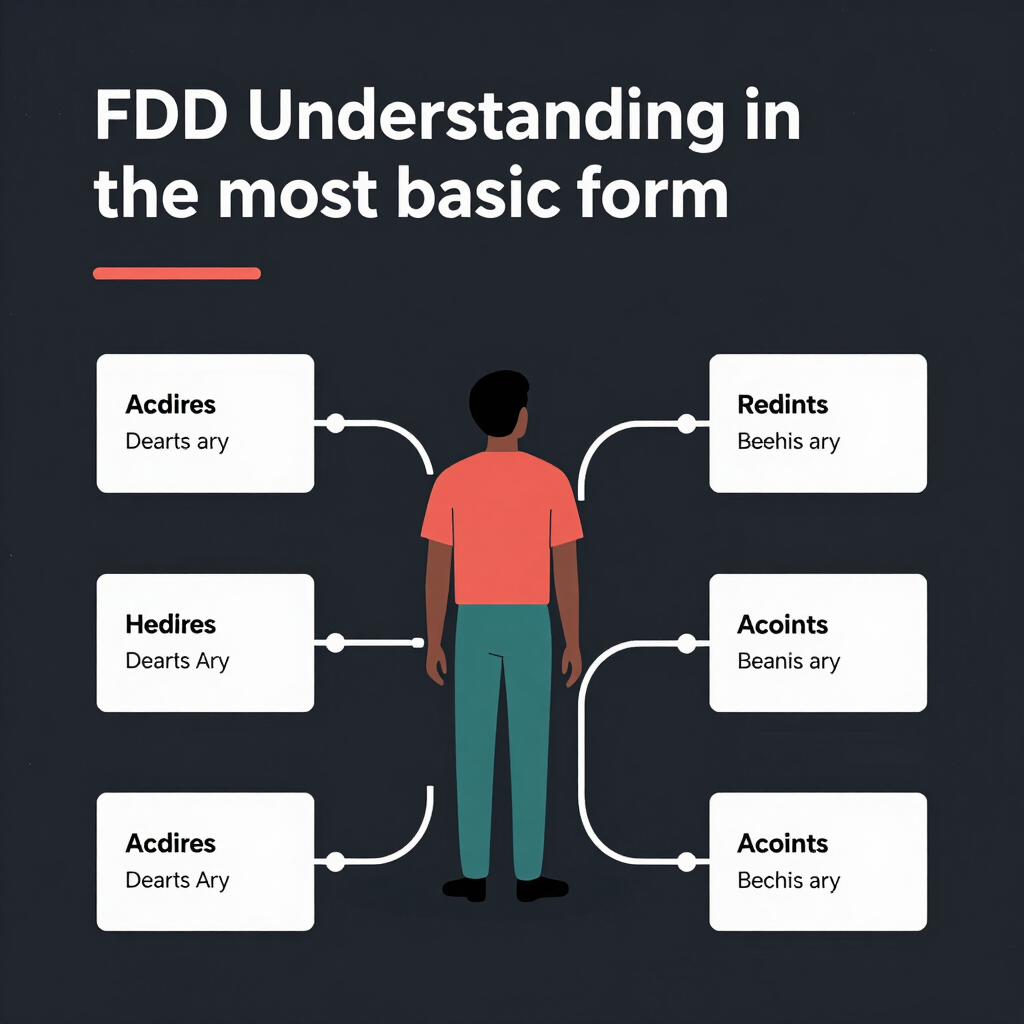
A well-scoped FDD report typically addresses six core areas:
Quality of Earnings (QoE): This is the heart of FDD. The analyst examines the target's revenue and EBITDA, strips out non-recurring items, normalises for owner-specific costs, and arrives at a sustainable, adjusted EBITDA that reflects what the business can actually deliver to a new owner. Every add-back is scrutinised. Every normalisation has to be defensible.
Net Debt and Debt-Like Items: Beyond the obvious bank borrowings, FDD identifies items that behave economically like debt—pension deficits, deferred revenue, earn-out obligations, capex commitments, and off-balance-sheet liabilities. These adjust the equity price at closing.
Working Capital Analysis: FDD establishes what a "normal" level of working capital is for the business over a full cycle, and compares it to the closing balance. The difference feeds into the price adjustment mechanism in the Sale and Purchase Agreement.
Revenue and Customer Analysis: Who are the top customers? Are revenues concentrated? Are contracts locked in or rolling? Is there channel shift? Is revenue truly recurring, or is it lumpy and project-based?
Cash Flow Analysis: How well does reported EBITDA convert to actual cash? What are the maintenance capex requirements? Is working capital a source or a use of cash as the business grows?
Historical Trend Analysis: Three to five years of financials are reviewed to identify inflection points, one-off events, seasonality patterns, and management's track record of delivering on forecasts.
Who Conducts FDD?
FDD is typically performed by transaction services teams—specialised advisory groups within Big 4 firms (EY, Deloitte, KPMG, PwC) or boutique M&A advisory firms. These teams are staffed by finance professionals who combine accounting rigour with commercial judgment.
In India, the Big 4 transaction services practices have grown significantly over the past decade, driven by the surge in domestic PE activity, cross-border acquisitions, and GCC-related transactions. Boutique firms—including DPO&Co, which I am affiliated with—have carved out a meaningful share of the middle market, where personalised, senior-led attention matters.
The buyer's legal counsel commissions FDD as part of the acquisition process. In a vendor due diligence (VDD) structure, the seller commissions and shares the report proactively—this is increasingly common in competitive auction processes.
FDD vs Audit: A Critical Distinction
Many finance students confuse FDD with an audit. They are structurally and philosophically different.
An audit verifies that financial statements comply with accounting standards and present a true and fair view. The auditor's client is the company itself (or its shareholders). The auditor signs off that the accounts are not materially misstated.
FDD is advocacy work on behalf of the buyer. The FDD advisor is not providing assurance—they are providing insights. They are not bound by auditing standards. They are free to challenge management representations, recut the financials, and form an independent view of the business's financial quality. They are working for the buyer, not the company being examined.
This distinction matters enormously for career positioning. FDD professionals are not doing audit. They are doing commercial analysis through a financial lens.
Why Does FDD Matter for a Deal?
FDD can and does change deal outcomes. In my 14 years of deal experience, I have seen FDD:
Reprice a transaction by 20% after uncovering normalisation adjustments the seller had not disclosed. Expose revenue concentration in a single customer that accounted for 40% of EBITDA—a finding that fundamentally changed the deal structure. Identify ₹25 crore of debt-like items that had not been reflected in the initial offer price. Cause a buyer to walk away from a deal entirely after discovering that reported growth was an accounting artefact rather than genuine commercial momentum.
FDD is not a compliance exercise. Done well, it is the most commercially significant piece of analysis on any deal.
The FDD Report: What Does the Deliverable Look Like?
The primary deliverable is a written report—typically 50 to 150 pages for a mid-market deal, structured around the core areas described above. It includes:
An executive summary of key findings and deal considerations. A quality of earnings section with a normalised EBITDA bridge. A net debt and working capital section with commentary on adjustments. Revenue analysis with customer and product-level breakdowns. A cash flow analysis section. Appendices with supporting schedules and data.
The FDD team also maintains a detailed databook—a multi-tab Excel workbook that contains all the underlying analysis, reconciled to the source data provided by management. The report is the story. The databook is the evidence.
How Long Does FDD Take?
For a mid-market deal, a typical FDD process runs three to six weeks from data room opening to report delivery. Larger or more complex deals can run eight to twelve weeks.
The timeline is driven by data quality, management responsiveness, deal complexity, and the number of workstreams running in parallel. Data rooms that are well-organised and complete dramatically accelerate the process. Data rooms that are chaotic—missing monthly management accounts, lacking customer-level data, or containing inconsistent schedules—add significant time and cost.
Is FDD the Right Career for You?
FDD suits finance professionals who enjoy commercial problem-solving, can work under pressure in compressed timelines, and have the intellectual curiosity to dig into the details behind the headline numbers.
It is not for those who want a predictable, 9-to-5 environment. Deal timelines shift. Data rooms open at midnight. Clients need answers by morning.
But for those who thrive in that environment—and most FDD practitioners do—it offers unmatched exposure: multiple industries, multiple deal structures, direct access to senior management of target companies, and a front-row seat to how value is created and transferred in M&A transactions.
📌 Want to learn FDD the way it is actually done on live deals? Enroll in the Investyn Deal Fluency FDD Masterclass.

Get in Touch
Phone
+91-9877358600
raman.khunger@outlook.com
Important links
D9, Omicron 1A, Greater Noida - 201310